
Home > News > Industry News > Solar Speed Limit Signs for Sale: Key Features, Cost Factors, and Roadside Selection Guide


Solar Speed Limit Signs for Sale: Key Features, Cost Factors, and Roadside Selection Guide
Why Solar Radar Speed Limit Signs Matter for Road Safety
Static speed limit signs communicate the legal speed limit, but they cannot show drivers how fast they are actually traveling. On highway ramps, rural roads, and sections approaching sharp bends, this limitation can make it harder to attract a driver's attention to excessive speed. Electronic speed feedback signs address this gap by measuring vehicle speed and displaying immediate feedback.
For road authorities and traffic engineering contractors, a solar powered radar speed limit sign offers a practical option for locations where real-time speed warnings are needed but grid power is difficult or expensive to access. However, choosing the right equipment requires more than comparing display sizes or asking for the lowest quotation. Radar performance, warning visibility, power-system design, installation conditions, and maintenance requirements all affect the suitability and long-term cost of a system.
When evaluating solar powered speed limit signs cost or comparing a solar speed limit sign for sale, procurement teams should assess the complete equipment configuration against the requirements of the intended road section.
How a Solar Powered Radar Speed Limit Sign Works
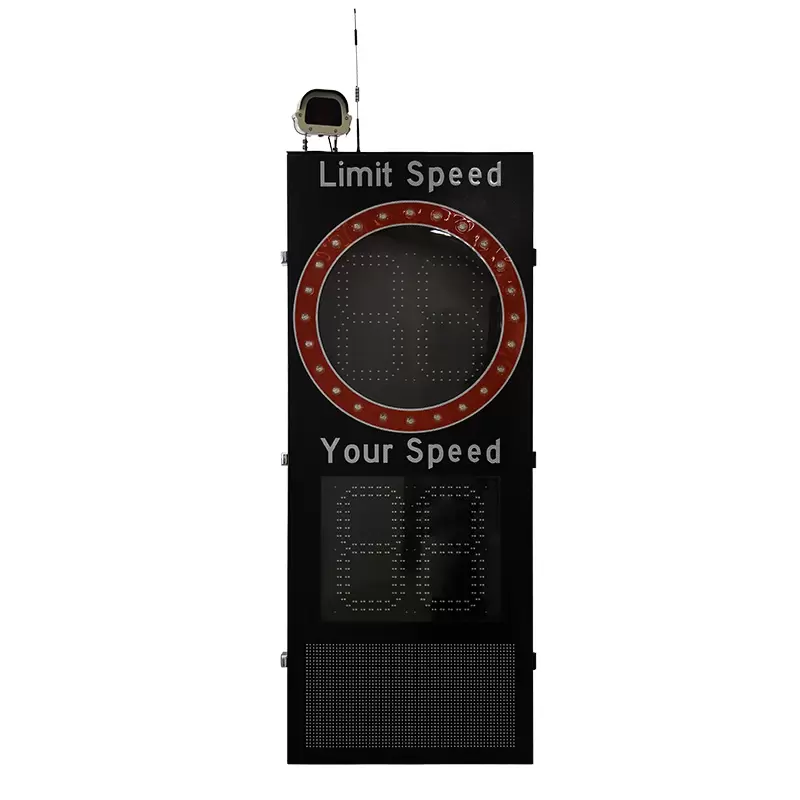
A Solar Powered Radar Speed Limit Sign integrates radar-based vehicle speed detection with electronic displays and a power supply system. Its main functions are related but distinct: the radar measures vehicle speed, the display communicates information to drivers, and the power system supplies the energy required for operation.
Understanding these components helps buyers evaluate equipment specifications without confusing a feature advertised by a supplier with a verified performance capability.
Millimeter-Wave Radar for Real-Time Speed Detection
The radar module detects approaching or passing vehicles and measures their speed. The measured value can then be used by the display system to provide real-time speed feedback and, where configured, an overspeed warning.
Radar selection should reflect the road's operating conditions. A sign installed on a highway ramp may face vehicles traveling at different speeds and approaching from a relatively open direction. An installation near a bend or on a road with multiple lanes may require a different assessment of detection geometry and vehicle separation.
Buyers should request the manufacturer's documented speed measurement accuracy, operating speed range, effective detection distance, detection angle, and supported traffic directions. Multi-target detection also deserves particular attention where several vehicles may enter the detection area simultaneously.
The term "high precision" should be supported by a defined specification and test conditions. Procurement teams should establish whether the stated accuracy applies across the intended speed range and installation geometry rather than relying on a general marketing description.
Adjustable Speed Limits and Multi-Mode Displays
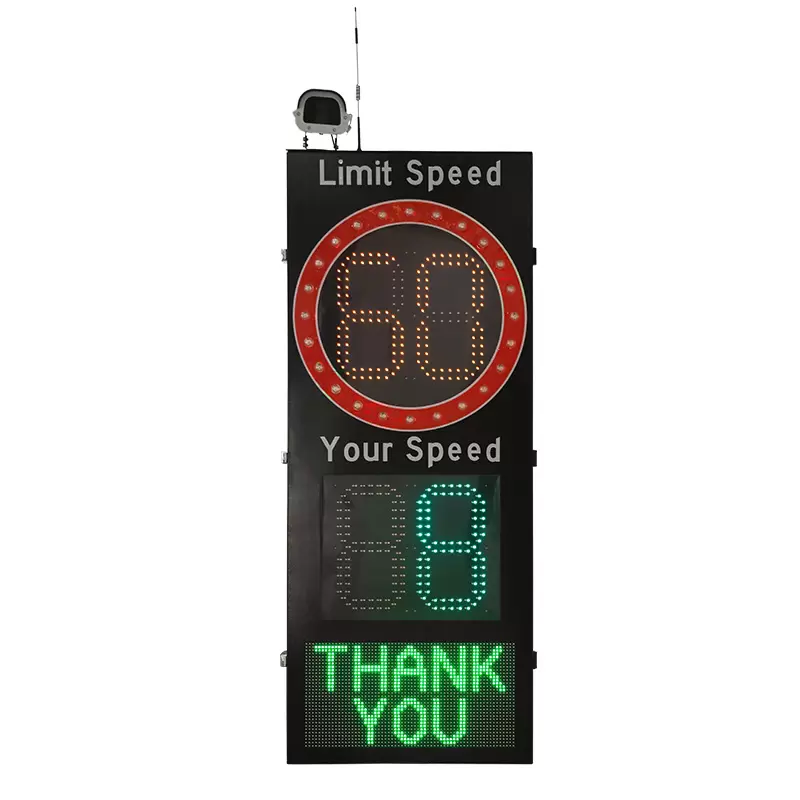
A dynamic speed warning system can combine three display elements:
Speed limit display: Communicates the applicable speed limit to drivers.
Real-time speed display: Shows the detected speed of an approaching vehicle.
Dual-color information screen: Provides additional visual emphasis or warning messages according to the configured display logic.
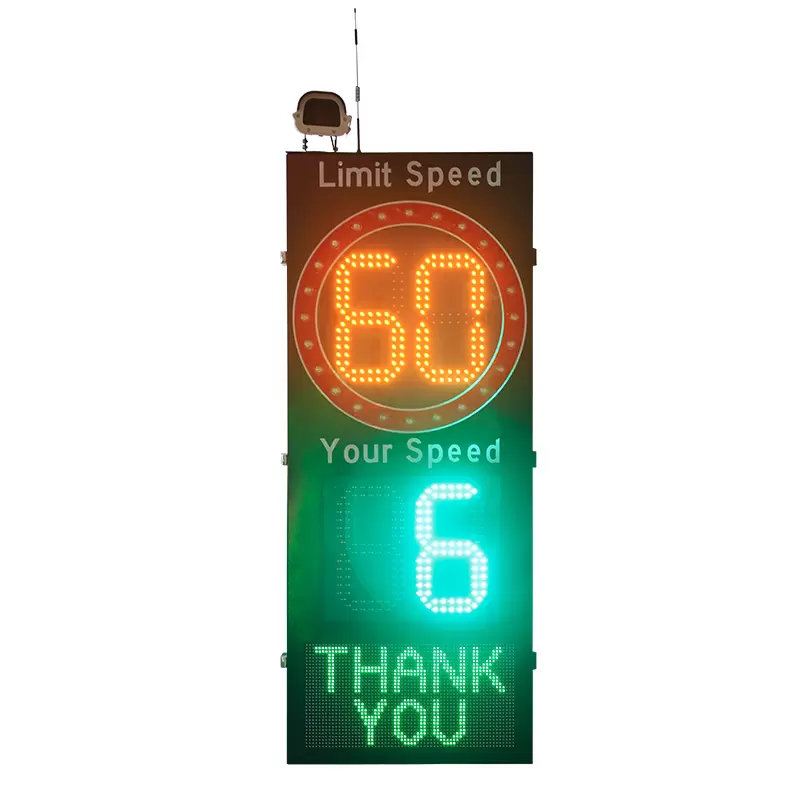
Together, these elements can make speed information more noticeable than a static sign alone. The precise warning behavior depends on the controller and display configuration, so buyers should confirm whether the system changes color, displays text, or activates a particular warning only when a vehicle exceeds the configured limit.
Adjustable speed limits are useful where road authorities need different settings for different road sections or operating periods. However, purchasers should confirm how the limit is changed, who is authorized to modify it, and whether the adjustment is performed locally or through a supported remote-control function. Remote management should not be assumed unless it is included in the specified configuration.
The display itself also requires careful evaluation. Digit height, contrast, viewing angle, ambient light, and the available time for a driver to read the information all affect practical visibility. A larger display may be appropriate for a higher-speed approach, but the final specification should reflect the road layout and the manufacturer's verified viewing requirements.
Solar Power and Mains Power: Choosing the Right Arrangement
Solar power can reduce dependence on roadside electrical infrastructure. This is particularly relevant for rural roads, isolated approaches, and other locations where bringing a mains connection to the sign would require additional civil or electrical work.
The FAMA Solar Powered Radar Speed Limit Sign supports solar or mains power, according to the supplied product information. This dual-mode arrangement gives project planners another option when deciding how to provide reliable power at each installation.
Nevertheless, a solar panel does not by itself guarantee continuous operation. The power system must be designed around the sign's energy consumption, local solar conditions, battery storage, and expected periods of low sunlight.
Before purchasing, ask for the solar panel rating, battery capacity, charging arrangement, daily energy consumption, and specified autonomy under defined operating conditions. For a mains-powered installation, confirm the input requirements and the exact role of the alternative supply. If the system supports automatic switching between power sources, request documentation explaining its operation.
In locations with frequent cloudy or rainy weather, a documented power budget is more useful than a general claim of all-weather reliability.
Choosing a Solar Speed Limit Sign for Sale
The most suitable sign is not necessarily the one with the largest display or the most features. It is the one whose verified specifications match the traffic conditions, installation environment, and operating requirements of the project.
Match Radar Performance to the Road
Road geometry and traffic behavior should guide the radar specification.
On a highway ramp, the sign may need to provide feedback before vehicles reach a merging point or a section with a reduced speed limit. On a national or provincial road, buyers should consider the prevailing traffic speed, lane arrangement, roadside mounting position, and distance available for drivers to respond. In urban and suburban hazard areas, the design may need to account for lower approach speeds, nearby intersections, pedestrians, or other potential sources of detection interference.
The procurement specification should therefore identify the required operating speed range, measurement accuracy, detection distance, detection angle, and multi-target performance. These values should be confirmed against the manufacturer's documentation and the actual installation conditions.
If the project requires detection across multiple lanes, ask the supplier to explain how the radar distinguishes vehicles and how simultaneous traffic affects speed attribution. A general multi-target detection claim is not a substitute for confirming performance under the expected traffic conditions.
Evaluate Display Size, Visibility, and Warning Logic
A display that is easy to read at a short distance may not provide enough reading time on a faster approach. Buyers should assess the relationship between approach speed, sign placement, digit size, and the distance at which the display becomes legible.
The warning configuration also matters. Some projects may require only a speed limit and live speed feedback. Others may benefit from an additional text message or a dual-color warning when the measured speed exceeds a preset threshold.
Before placing an order, confirm:
Display dimensions, digit height, and viewing characteristics.
Whether the speed limit and measured speed appear simultaneously.
Available colors, text messages, and overspeed warning behavior.
How speed thresholds and other display settings are configured.
Language options and customization requirements for overseas projects.
The buyer should distinguish between features included in the standard product and functions that require additional hardware, software, or customization.
Assess Outdoor Durability and Installation Requirements
Outdoor signs must withstand the environmental conditions at their intended locations. High temperatures can affect electronic components and battery performance; low temperatures may reduce available battery capacity. Strong winds place mechanical loads on the sign, pole, brackets, and foundation. Rain, dust, moisture, and direct sunlight also influence equipment selection.
A suitable procurement process should verify the operating temperature range, enclosure protection rating, material specifications, corrosion protection, wind-load requirements, and any applicable environmental test reports. The required performance depends on the installation location and local engineering standards.
Mounting arrangements should be reviewed at the same time. Buyers need to establish whether the quotation includes a pole, mounting brackets, foundation design, cabling, and installation hardware. They should also confirm access for battery replacement, inspection, cleaning, and other maintenance work.
For projects in remote locations, ease of servicing may be just as important as the initial equipment specification.
Questions to Ask Before Requesting a Quotation
A useful request for quotation (RFQ) gives the manufacturer enough information to recommend an appropriate configuration.
Procurement teams should provide the following details where available:
1. Installation location: Country, climate, road type, roadside conditions, and relevant local standards.
2. Traffic conditions: Posted speed limit, typical vehicle speeds, lane arrangement, traffic volume, and whether multiple vehicles must be detected.
3. Display requirements: Sign dimensions, speed digit size, colors, warning messages, language, and adjustable-limit requirements.
4. Power conditions: Solar-only or dual-mode supply, available mains power, expected sunlight exposure, and required operation during prolonged cloudy weather.
5. Installation requirements: Mounting height, pole and foundation arrangements, wind exposure, cable routing, and site-access limitations.
6. Project scale: Quantity, delivery destination, delivery schedule, packaging requirements, and any project-specific documentation.
7. After-sales expectations: Warranty coverage, spare parts, technical assistance, troubleshooting procedures, and maintenance arrangements.
Providing these details helps suppliers quote comparable configurations rather than prices for equipment that may differ substantially in functionality.
Solar Powered Speed Limit Signs Cost: What Determines the Price?
There is no single price that applies to every solar radar speed limit sign. The final quotation depends on the equipment configuration, project requirements, manufacturing scope, and delivery arrangements.
Without a confirmed specification and supplier quotation, presenting a universal market price or an unsupported price range would be misleading. Buyers can instead evaluate the main cost drivers systematically.
Radar Module and Detection Requirements
Radar specifications influence the equipment configuration. Required measurement accuracy, operating speed range, detection geometry, multi-target capability, and integration requirements should all be confirmed before comparing quotations.
A project requiring documented performance across multiple lanes may have different technical requirements from one covering a straightforward single-lane approach. The relevant question is not simply whether a supplier offers radar detection, but whether the proposed module meets the project's defined acceptance criteria.
Display Dimensions and Warning Functions
Display size, digit height, the number of display modules, color configuration, and customized messages can affect material and manufacturing costs.
A basic speed feedback display and a system with a separate speed limit panel, dynamic speed display, and additional information screen are not necessarily equivalent products. Buyers should compare the actual display architecture, controller functions, and included warning modes.
Custom graphics, multiple languages, special message sequences, and project-specific interface requirements may also affect engineering and production costs.
Solar Panels, Batteries, and Backup Power
The power system is another important cost factor. Solar panel capacity, battery type and capacity, charging electronics, energy-management functions, and the provision of a mains power option all influence the final configuration.
The appropriate design depends on the local solar resource and the energy consumed by the radar, display, and controller. A location with frequent cloudy periods may require a different power budget from a location with more consistent sunlight.
A larger battery should not automatically be treated as proof of greater reliability. Buyers need to understand the complete energy balance, including charging conditions, standby consumption, display operating patterns, and the required autonomy period.
Enclosure, Mounting Structure, and Customization
The enclosure and mounting system must suit the expected outdoor environment. Material selection, corrosion protection, ingress protection, structural design, and wind-load requirements can affect cost.
Project-specific poles, brackets, foundations, cable assemblies, and installation accessories may be priced separately. Buyers should determine whether the quotation covers the complete installation package or only the sign itself.
Customization also has commercial implications. Special display layouts, customized housings, control interfaces, and non-standard electrical requirements may involve additional design work, validation, and production coordination.
Order Quantity and Delivery Scope
For distributors and contractors purchasing multiple units, the total order may affect production planning, component procurement, packaging, and logistics. However, any volume discount should be confirmed through a formal quotation rather than assumed.
The delivered cost may also include export packaging, freight, insurance, import duties, commissioning, installation, and training, depending on the contract. Comparing equipment prices without checking these items can produce an inaccurate assessment of the total project budget.
How to Compare Initial Price With Long-Term Operating Cost
A lower purchase price does not necessarily represent the lowest total cost of ownership. Procurement teams should evaluate the complete cost over the intended service period, using confirmed assumptions rather than unsupported service-life or savings claims.
The main cost categories include:
Cost category | What buyers should verify |
Initial equipment | Radar, display, controller, solar panel, battery, and included accessories |
Installation | Pole, foundation, mounting hardware, electrical work, and site preparation |
Routine maintenance | Inspection, cleaning, battery checks, and other scheduled work |
Repairs and replacement | Spare-part prices, component availability, labor, and shipping |
Power supply | Mains electricity where used, battery replacement, and any required charging-system maintenance |
Project support | Commissioning, training, technical documentation, and after-sales assistance |
For a solar-powered installation, savings from avoiding a new grid connection may be relevant, but they depend on site conditions and the alternative power arrangement. Similarly, the maintenance requirements of a solar sign depend on the actual battery, electronics, enclosure, and installation environment.
A practical comparison should use the same evaluation period and operating assumptions for every quotation. It should also distinguish confirmed costs from estimates and identify any items excluded from the supplier's price.
Supplier Evaluation: Beyond the Product Specification
A manufacturer should be able to explain the proposed configuration, provide supporting technical documentation, and clarify which performance requirements can be guaranteed.
Before making a purchase decision, buyers should request the product datasheet, wiring and installation instructions, power-system specifications, applicable test reports, warranty terms, spare-parts information, and documented acceptance criteria. If a project requires particular certifications or compliance with local traffic-sign standards, these requirements should be identified and verified before production.
Quality control is especially important for projects involving multiple units. Ask how the manufacturer checks radar operation, display functions, power-system performance, enclosure assembly, and final product consistency. For customized orders, the approval process should establish the agreed configuration before mass production begins.
Production capacity and delivery planning also deserve attention. Contractors working to a fixed construction schedule need clear lead times, confirmation of component availability, packaging details, and a defined process for handling defects or missing components.
A supplier's experience in intelligent transportation can provide useful context, but buyers should distinguish general traffic-system experience from documented experience with the specific radar speed sign being purchased.
Why Consider FAMA for Intelligent Traffic Equipment?
Yangzhou FAMA Intelligent Equipment Co.,Ltd. provides integrated intelligent transportation solutions under the corporate mission of “making travel safer and smarter”. Its stated areas of specialization include smart signal control, smart traffic safety, and 5G multifunctional smart poles, together with services related to traffic signal timing optimization, operation and maintenance, and related project support.
The Solar Powered Radar Speed Limit Sign described in this article combines millimeter-wave radar detection, adjustable speed limits, dynamic speed feedback, a dual-color information display, and solar or mains power options. These functions address several common procurement considerations: real-time speed indication, configurable warnings, and flexibility in selecting a power arrangement for different roadside locations.
For project teams evaluating a solar speed limit sign for sale, the next step is to confirm the exact product configuration and obtain the technical specifications relevant to the proposed road environment.
Buyers can review FAMA's product catalogue to explore its traffic equipment range and visit the FAMA project portfolio to examine examples of its broader traffic-equipment projects. These resources provide background on the company's product offering and project experience; the suitability of a specific solar radar speed sign should still be established through product-specific documentation and project requirements.
FAMA - The Leading Enterprise In China's Traffic Signal Lights Industry
Frequently Asked Questions
What factors have the greatest influence on solar powered speed limit signs cost?
The main factors include radar performance, display size and warning functions, solar panel and battery configuration, backup power arrangements, enclosure protection, mounting hardware, customization, order quantity, and delivery scope. The relative importance of each factor depends on the project's technical requirements and installation conditions.
How is a solar radar speed limit sign different from a static speed limit sign?
A static sign communicates the posted limit but does not measure a vehicle's actual speed. A radar speed limit sign can detect vehicle speed and display real-time feedback, with additional overspeed warnings when the relevant functions are configured. This makes the electronic sign an active feedback device rather than a replacement for the legal speed limit itself.
How should buyers choose a sign for different road types?
Start with the posted speed limit, traffic direction and volume, lane arrangement, available detection distance, and the time drivers have to respond to a warning. Then confirm radar accuracy, detection range, display visibility, mounting requirements, and environmental specifications against the manufacturer's documentation.
Can solar-powered signs continue operating during several days of rain?
That depends on the installed solar capacity, battery storage, system energy consumption, and local weather conditions. Buyers should request a documented autonomy calculation and clarify the assumptions used, including display operation and expected sunlight availability. Where continuity is critical, an appropriately specified mains power option may provide an additional operating arrangement.
What is the benefit of dual-mode solar and mains power?
Dual-mode power gives project planners more flexibility when selecting an installation location and supply arrangement. The practical benefit depends on how the two sources are configured. Buyers should confirm whether switching is automatic, whether a separate electrical connection is required, and what happens if the primary supply becomes unavailable.
What should buyers confirm before placing an order?
At minimum, verify radar measurement accuracy, operating speed range, detection distance, multi-target capability, display specifications, adjustable-limit functions, solar and battery ratings, operating temperature, enclosure protection, mounting requirements, warranty conditions, spare-parts availability, and delivery scope. Any required certification or local regulatory compliance should also be documented before procurement.
Final Considerations
Selecting a solar radar speed limit sign is a technical and commercial decision. Radar performance determines whether vehicle speed can be measured appropriately; display configuration determines how that information is communicated; and power-system design affects whether the equipment can operate under the site's expected conditions.
For buyers comparing solar powered speed limit signs cost, the most reliable approach is to request quotations based on a consistent technical specification and compare both initial price and ongoing requirements. For those searching for a solar speed limit sign for sale, the priority should be a documented match between the equipment, the road environment, the warning requirements, and the project's installation and maintenance plan.


