
Home > News > Industry News > Pedestrian Crossing Button for Sale: Selection, Reliability and Troubleshooting Guide


Pedestrian Crossing Button for Sale: Selection, Reliability and Troubleshooting Guide
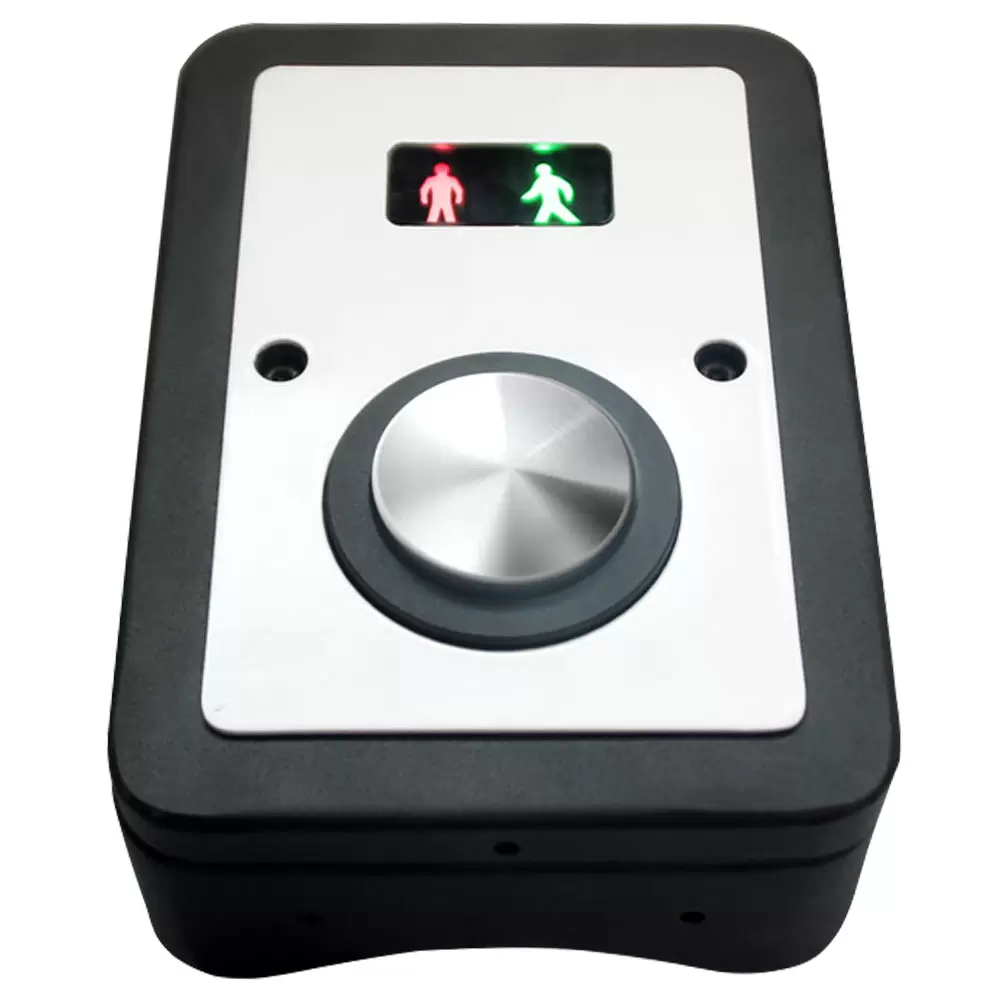
A pedestrian crossing button is a small but important component of a traffic signal system. When it fails to register a request, provides unclear feedback, or operates inconsistently after prolonged outdoor exposure, pedestrians may not know whether their request has been received, while maintenance teams must determine whether the problem lies in the button, its wiring, or the signal controller.
For traffic authorities, municipal engineering contractors, system integrators, and traffic equipment distributors, evaluating a Pedestrian crossing button for sale requires more than comparing unit prices. Mechanical durability, controller compatibility, accessible operation, installation requirements, and replacement costs all influence long-term performance. Equally, understanding Crosswalk button not working scenarios helps maintenance teams identify faults without unnecessarily replacing functional equipment or interfering with traffic signal operations.
A pedestrian crossing push button sends a request to the traffic signal controller. The controller processes that request according to its programmed operating logic and arranges pedestrian movement at an appropriate point in the signal cycle. Reliable operation therefore depends on the complete system, including the user interface, electrical connections, controller configuration, and pedestrian signal timing.
1. How Pedestrian Crossing Buttons Work in Traffic Signal Systems
From a pedestrian request to a controlled crossing phase
A pedestrian crossing push button allows people to request a crossing opportunity at a signalized intersection. When activated, the device sends an electrical or otherwise configured input to the traffic signal controller. The controller then processes the request and determines when the pedestrian phase can operate safely within the programmed sequence.
The exact response depends on the intersection design. At some locations, the request is registered for the next eligible pedestrian phase. At others, the controller may use different timing plans, coordination requirements, or demand-responsive logic.
This distinction matters during both procurement and maintenance. Pressing the button does not necessarily produce an immediate green pedestrian signal. A delay alone is not proof of equipment failure, and the button should not be evaluated independently of the control system to which it connects.
Key components and their functions
A conventional pedestrian crossing button assembly can include the following elements, depending on the product design:
Operating surface and actuator: Receives the pedestrian's input and initiates a request.
Housing and mounting structure: Protects internal components and secures the device to a pole or designated mounting point.
Electrical contacts and connections: Transfer the request to the relevant control circuit.
User feedback features: May provide a visual, tactile, audible, or other indication, depending on the configuration.
Traffic signal controller: Registers and processes the request before coordinating the pedestrian phase with vehicle movements.
These components perform different roles. A damaged actuator may prevent a request from being generated, while a wiring fault may interrupt an otherwise valid input. A correctly registered request can also be delayed by the controller's operating sequence.
For this reason, effective product selection and troubleshooting must consider the entire signal path rather than treating every problem as a defective push button.
2. What Determines Reliability in Outdoor Applications?
Pedestrian buttons at city intersections, school crossings, and busy commercial streets can experience repeated operation, rain, dust, temperature changes, accidental impacts, and other site-specific stresses. Their suitability depends on both physical construction and compatibility with the installed traffic infrastructure.
Housing material and environmental resistance
A high-strength metal housing can provide a robust physical enclosure for outdoor equipment. Impact resistance and corrosion resistance are particularly relevant where the device is frequently used or exposed to harsh environmental conditions.
However, the housing material alone does not establish the performance of the complete assembly. Seals, fasteners, cable entries, internal components, and installation quality also influence resistance to moisture and environmental exposure.
When evaluating a product, buyers should request the manufacturer's documented information on:
Housing material and surface treatment.
Verified impact-resistance and corrosion-resistance performance.
Applicable ingress-protection rating, if specified.
Permitted operating temperatures and environmental conditions.
Installation orientation and cable-entry requirements.
Do not assume a particular IP rating, waterproof capability, or temperature range unless the manufacturer has confirmed it for the actual model.
Mechanical operating life and maintenance planning
The supplied product information for the Pedestrian Crossing Push Button states that its mechanical life can reach up to 1,000,000 operations. This figure is useful for comparing products, but it needs to be interpreted correctly.
A million operations refers to a stated mechanical operating-life capability, not a guarantee that every installed device will remain fault-free for a fixed number of years. Actual service life can be influenced by operating frequency, installation quality, environmental exposure, component condition, and maintenance practices.
For example, a button serving a busy urban intersection may accumulate more operations than one installed on a road with occasional pedestrian demand. Procurement teams should therefore compare the stated operating-life rating with expected usage and request clarification about the manufacturer's test conditions.
A durable actuator and robust housing can help reduce avoidable replacements, but lifecycle cost also depends on wiring reliability, spare-part availability, maintenance access, and the time required to diagnose a fault.
User feedback and accessible operation
Accessible pedestrian controls must be evaluated according to the needs of the intended users and the applicable local accessibility standards.
Relevant considerations include the force and ease of operation, mounting height and reach, the clarity of operating instructions, and whether the device offers suitable feedback. Depending on the product configuration and project requirements, this feedback may include tactile markings, audible indications, vibration, or visual status information.
These features should not be assumed to be standard on every model. Buyers should confirm which functions are included, which are optional, and whether the complete installation meets the relevant accessibility requirements.
At school crossings, transit access points, and busy urban intersections, accessible operation is particularly important because users may have different mobility, sensory, and interaction needs.
3. Crosswalk Button Not Working: Common Causes and Troubleshooting
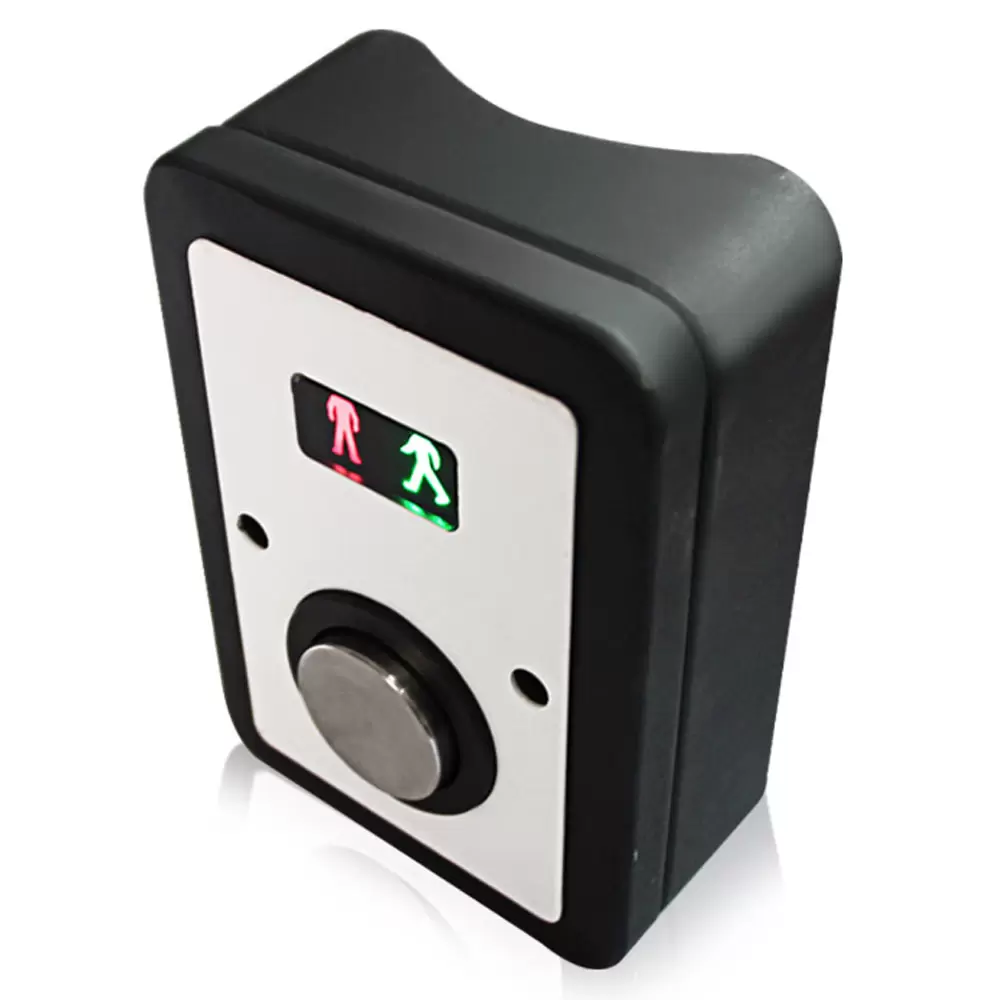
When a pedestrian reports that a crosswalk button is not working, maintenance personnel should first identify the actual symptom. A button that cannot be physically activated requires a different inspection process from one that registers a request but does not appear to change the pedestrian signal.
The following diagnostic approach helps separate potential device faults from wiring and controller issues.
Symptom 1: Pressing the button produces no noticeable feedback
Possible causes include a worn or damaged actuator, failed internal contacts, loose connections, a broken conductor, or a feedback feature that is not configured to provide an immediate indication.
A lack of audible or visual feedback does not necessarily prove that the controller has failed to receive the request. Some devices have no dedicated confirmation indicator, while others provide feedback only under particular operating conditions.
A qualified technician should check the button's physical condition, verify the specified feedback behavior, and inspect the relevant input circuit using the manufacturer's procedures. If the input is registered at the controller, replacing the button may not solve the underlying problem.
Symptom 2: The indicator does not illuminate
The first step is to establish whether the installed model actually includes an indicator and what that indicator is designed to communicate.
If an indicator is specified but remains inactive, potential causes include a failed indicator component, an electrical connection problem, a power-supply issue, or a fault in the associated circuit. Some button designs do not have a separate powered indicator, so the absence of illumination should not be treated as a universal failure criterion.
Maintenance personnel should compare the observed behavior with the product documentation and approved wiring diagram before deciding which component needs attention.
Symptom 3: The button provides feedback, but the pedestrian signal does not turn green
This is one of the most easily misdiagnosed situations.
A button may register an input successfully while the controller continues to manage the current traffic phase. The pedestrian indication may not change until the next permitted phase, after a configured delay, or when other programmed conditions have been satisfied.
The appropriate diagnostic sequence is to:
1. Confirm that the observed feedback matches the device's documented behavior.
2. Observe the pedestrian and vehicle signal indications without interfering with traffic operations.
3. Have an authorized technician verify whether the controller has registered the pedestrian call.
4. If the request is registered, review the applicable phase sequence, timing plan, and controller status.
5. If the request is not registered, inspect the button input, wiring, terminals, and associated electrical circuit according to the approved maintenance procedure.
This sequence helps distinguish an input failure from a controller configuration or signal-timing issue.
A pedestrian signal that does not turn green immediately after a button press is not, by itself, evidence that the button is defective.
Symptom 4: The button works intermittently
Intermittent faults can be more difficult to diagnose because the equipment may operate normally during a brief inspection.
Potential causes include deteriorating mechanical contacts, loose wiring, corrosion at electrical connections, moisture ingress, damaged cable insulation, or unstable power where the design requires a powered circuit.
A qualified technician should document when the fault occurs, whether it follows rain or other environmental exposure, and whether the problem affects one button or multiple devices connected to the same controller.
Recurring faults should be investigated rather than resolved through repeated resets or unverified component replacement. If the button's mechanical assembly is damaged, replacement may be appropriate. If the input signal is lost elsewhere in the circuit, the repair must address that underlying fault.
Distinguishing a button fault from a system fault
Observation | Possible explanation | Appropriate next step |
Actuator is physically damaged or stuck | Mechanical failure | Inspect the assembly and assess replacement |
Button activates, but no configured feedback occurs | Feedback component, circuit, or expected behavior requires verification | Check product documentation and the specified feedback circuit |
Controller does not register a request | Button, wiring, connection, or input-circuit fault | Trace the input path using approved procedures |
Controller registers the request, but the signal has not changed | Normal timing logic or a controller configuration issue | Review the active phase sequence and timing plan |
Several pedestrian buttons are affected | Shared wiring, controller, or other system-level fault may be involved | Investigate the common system components |
Fault appears intermittently after wet weather | Moisture, corrosion, or connection problems may be involved | Inspect environmental sealing and electrical connections |
These are diagnostic possibilities, not definitive fault assignments. The technician must verify the actual cause before replacing components.
Traffic signal equipment must be inspected and repaired in accordance with local traffic-management rules and electrical safety requirements. Isolation, wiring changes, controller access, and device replacement should be performed by appropriately qualified and authorized personnel. Unqualified users should not open the controller cabinet or modify the signal system to test a button.
4. Pedestrian Crossing Button for Sale: How to Select the Right Product
For buyers comparing a pedestrian crossing button for sale, the most important question is whether the proposed device matches the existing infrastructure and the operating conditions of the intended crossing.
A product with a robust housing may still be unsuitable if its electrical interface does not match the controller input or if its mounting arrangement requires extensive site modifications.
Check controller compatibility before requesting a quotation
Compatibility should be established at the system level, not assumed from the product name.
Before selecting a device, confirm:
The existing traffic signal controller and relevant input specifications.
The electrical interface and wiring arrangement.
The expected input behavior and any required feedback functions.
The available mounting position and physical dimensions.
Any project-specific accessibility or operational requirements.
If a site uses an existing controller, the supplier should confirm that the proposed button can work with that system under the intended configuration. Where the interface is unclear, provide the controller documentation and existing wiring information for technical review.
For new installations, the button should be assessed as part of the wider pedestrian signal arrangement rather than as an isolated purchase.
Compare mechanical durability and maintenance requirements
The housing, actuator, internal contacts, cable connections, and mounting hardware all contribute to operational reliability.
For sites with frequent pedestrian use, buyers should examine the stated mechanical operating life and the conditions under which it was established. They should also evaluate resistance to impact and corrosion, suitability for the local outdoor environment, and access to replacement components.
The supplied FAMA product information identifies a high-strength metal housing and a mechanical life of up to one million operations. These characteristics are relevant to durability assessment, but buyers should confirm the specifications of the exact model being quoted.
A useful comparison should include not only the purchase price, but also the expected inspection requirements, replacement-part costs, technician access, and potential service disruption associated with equipment failure.
Match the configuration to the crossing environment
Different locations can impose different operational demands.
Urban intersections: Frequent activation and integration with existing signal phases make mechanical durability and controller compatibility important.
School zones: Clear operating instructions, appropriate mounting, accessible interaction, and predictable signal-system behavior deserve particular attention.
Commercial streets and pedestrian-heavy districts: High usage may increase the importance of operating-life ratings, convenient maintenance, and readily available replacement parts.
Crossings exposed to severe weather: Housing construction, sealing, corrosion resistance, and documented environmental limits should be reviewed carefully.
Projects requiring enhanced accessibility: Confirm the required tactile, audible, vibration, or other assistance features against the project specification and applicable regulations.
A single configuration should not automatically be assumed suitable for every site. The purchasing specification should reflect actual operating conditions, user requirements, and local standards.
How product configuration affects purchase price
The unit price of a pedestrian crossing button can vary with several factors:
Cost factor | What buyers should evaluate |
Housing and construction | Material, surface treatment, structural design, and documented durability |
Mechanical design | Actuator construction, operating-life rating, and replacement requirements |
Accessibility configuration | Included feedback functions and optional assistance features |
Electrical compatibility | Interface requirements and any additional integration work |
Installation arrangement | Mounting hardware, dimensions, cable entry, and site modifications |
Customization | Special housing, labeling, mounting, or project-specific functions |
Order quantity | Volume pricing, production arrangements, spare-unit requirements, and delivery schedule |
Technical support | Documentation, compatibility confirmation, troubleshooting assistance, and replacement-part availability |
Customization can increase the initial cost when special components, engineering work, or nonstandard production are required. Larger quantities may qualify for different pricing, but the actual terms depend on the manufacturer's quotation and production arrangements.
For this reason, buyers should provide complete technical requirements when requesting prices. Comparing quotations based only on unit cost can overlook differences in configuration, compatibility, included accessories, and after-sales support.
Evaluate total cost of ownership
A lower initial price does not necessarily result in lower long-term expenditure.
A more useful purchasing assessment considers:
Lifecycle Cost=Purchase+Installation+Maintenance+Replacement
This is a simplified comparison framework, not a complete accounting formula. Project teams may also need to account for inspection labor, spare inventory, fault diagnosis, site access, and the operational consequences of equipment downtime.
Durable construction can help control avoidable replacement costs, while clear technical documentation and available spare parts can make maintenance more efficient. These benefits should be evaluated against verified product information rather than assumed from marketing descriptions.
5. Maintenance Practices That Support Long-Term Reliability
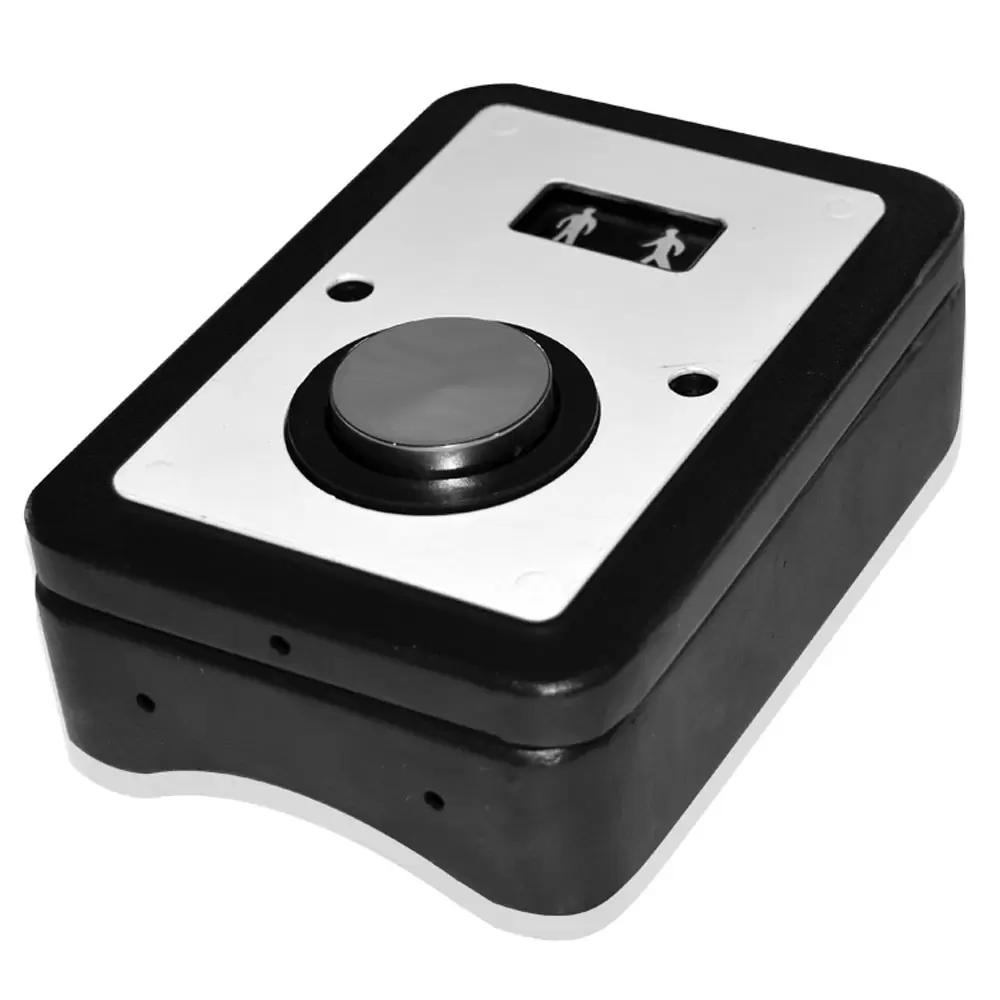
Even a well-selected pedestrian button requires appropriate inspection and maintenance. A practical maintenance program should focus on identifying deterioration before it causes repeated service problems.
Inspection tasks may include checking the actuator's physical condition, examining the housing and mounting hardware, looking for visible corrosion or moisture damage, and reviewing the condition of accessible cable connections. The button's expected feedback should also be checked against the manufacturer's documentation.
Where recurring faults are reported, maintenance records should distinguish between confirmed button failures, wiring problems, controller issues, and normal signal-timing behavior. This helps engineering teams identify recurring causes and avoid unnecessary replacements.
Inspection frequency should be based on the manufacturer's instructions, local requirements, site exposure, and observed operating conditions. A universal maintenance interval cannot be recommended without this information.
When replacement is necessary, the replacement unit should be checked for electrical compatibility, physical fit, required accessibility functions, and correct operation within the configured signal system. After installation, authorized personnel should complete the prescribed functional checks and document the results.
6. Working With FAMA on Pedestrian Crossing Equipment
Yangzhou FAMA Intelligent Equipment Co., Ltd. provides integrated intelligent transportation solutions, with a corporate mission of “making travel safer and smarter.” Its business covers smart signal control, smart traffic safety, and 5G multifunctional smart poles, alongside services such as traffic signal timing optimization and operation and maintenance.
FAMA - The Leading Enterprise In China's Traffic Signal Lights Industry
For procurement teams evaluating pedestrian crossing equipment, FAMA's product portfolio provides a starting point for reviewing related devices, including pedestrian crossing push buttons and traffic signal controllers.
Buyers can review the FAMA pedestrian crossing push button product for product-specific information and explore the wider FAMA product catalogue to assess related traffic signal equipment. The FAMA project portfolio can also help prospective customers review available project references relevant to their requirements.
For a quotation, purchasers should provide the intended application, existing controller information, required interface, mounting arrangement, environmental conditions, accessibility requirements, and estimated quantity. This information helps the manufacturer assess the proposed configuration and identify which specifications require confirmation.
Any project-specific claims about compatibility, environmental protection, operating life, or optional functions should be verified against the applicable product documentation and quotation.
7. Frequently Asked Questions
What should I check before buying a pedestrian crossing button for outdoor use?
Confirm the controller interface, electrical connection requirements, mounting arrangement, housing material, documented environmental resistance, mechanical operating-life rating, required feedback functions, and applicable accessibility requirements. Ask the manufacturer to confirm any specification that is not documented.
What does a mechanical life of one million operations mean?
It indicates a stated mechanical operating-life capability of up to one million operations under the applicable test conditions. It does not establish a guaranteed calendar service life or mean that every component will remain fault-free for that number of activations.
Why does a crosswalk button sometimes appear not to work?
The cause may be a damaged actuator, internal contact failure, faulty wiring, a power issue, or a controller-related problem. Alternatively, the request may have been registered but is awaiting the appropriate phase under the programmed signal timing. Diagnosis should establish where the request is lost, if it is lost at all.
When should a pedestrian crossing button be replaced?
Replacement may be appropriate when mechanical damage prevents reliable operation, a confirmed internal fault cannot be economically repaired, or the unit no longer meets the project's functional or environmental requirements. If the controller receives the request correctly, investigate the wider system before replacing the button.
How can municipalities reduce long-term maintenance costs?
Select equipment that matches the site's usage and environmental conditions, confirm compatibility before installation, maintain accurate fault records, inspect equipment according to applicable requirements, and ensure that suitable spare parts and technical support are available. These practices help reduce unnecessary replacement and repeated diagnostic work.
Conclusion
Selecting a reliable pedestrian crossing button requires a clear understanding of the relationship between the physical device, its electrical connections, the traffic signal controller, and the programmed pedestrian phase. Housing durability, mechanical operating life, accessible interaction, and controller compatibility all matter, but no single product characteristic can guarantee reliable operation across every installation.
When a crosswalk button is not working, the correct response is to diagnose the complete input path and verify the controller's behavior before assigning the fault to a specific component. For procurement teams, the same system-level approach supports better product comparisons, more informed quotations, and more effective lifecycle cost planning.
By combining verified specifications with appropriate installation, professional troubleshooting, and consistent maintenance, traffic authorities and contractors can make more defensible equipment decisions for urban intersections, school crossings, and other pedestrian facilities.


