
Home > News > Industry News > Why the Mesh Circuit Design in FAMA Traffic Low Power Full Ball Traffic Light Modules Eliminates Total Signal Failure


Why the Mesh Circuit Design in FAMA Traffic Low Power Full Ball Traffic Light Modules Eliminates Total Signal Failure
Urban traffic infrastructure no longer tolerates single-point failure. As intersections become denser, smarter, and more data-driven, the tolerance for signal blackout approaches zero. In this context, the internal electrical architecture of a traffic light module—often overlooked in procurement decisions—directly determines intersection safety, operational continuity, and long-term maintenance cost.
This article examines why mesh circuit design fundamentally eliminates total signal failure in modern signal lights, using the Low Power Full Ball Traffic Light Module developed by FAMA Traffic as a reference architecture. Rather than repeating basic definitions, this analysis focuses on structural reliability, electrical behavior under fault conditions, electromagnetic performance, and lifecycle implications—areas that directly influence real-world deployment outcomes.
A Different Starting Point: Reliability at the Circuit Topology Level
Traditional LED traffic light modules typically rely on series or partial-parallel circuit layouts. While efficient on paper, these structures share a structural weakness: a single LED bead or solder joint failure can propagate across an entire string, resulting in partial or total blackout of the signal face.
The mesh circuit design used in FAMA Traffic’s Low Power Full Ball Traffic Light Module takes a fundamentally different approach. Instead of linear dependency, each LED node is embedded in a distributed network topology, allowing current to reroute dynamically when a fault occurs.
This is not redundancy added at the system level; it is resilience engineered directly into the light board itself.
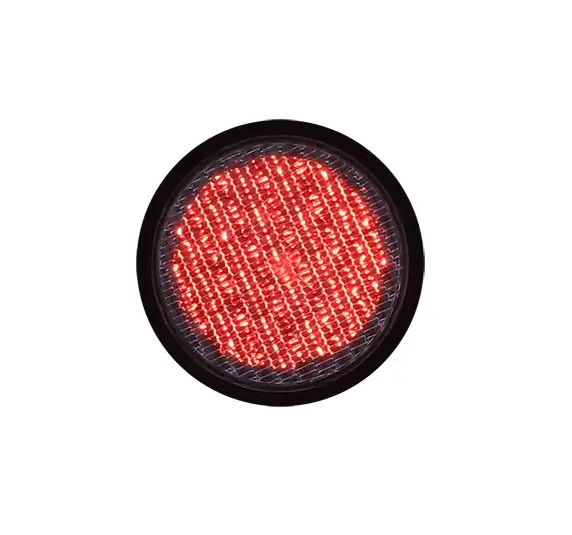
How Mesh Circuit Design Eliminates Total Signal Failure
1. Automatic Fault Isolation at the LED Level
At the core of mesh circuit logic is localized fault isolation. When an individual LED lamp bead fails—whether due to thermal stress, aging, or transient voltage—the circuit immediately isolates that point without interrupting current flow to surrounding nodes.
As a result:
Remaining LED beads continue operating normally
Luminous intensity remains visually stable to drivers
No sudden dark zones or misleading signal states appear
From a traffic safety perspective, this behavior is critical. Research published by international road safety authorities consistently shows that unexpected signal outages increase intersection accident rates by over 30% during peak hours. Mesh isolation directly addresses this risk at the component level.
2. Stable Display Integrity Under Partial Failure
Signal lights are not evaluated only by whether they are “on” or “off,” but by uniformity of display. Uneven brightness or visible dark spots can cause driver hesitation or misinterpretation, especially under adverse weather conditions.
The mesh circuit structure maintains:
Consistent current distribution
Balanced luminance across the signal face
No cascading dimming when isolated LEDs drop out
This ensures that even under partial degradation, the module preserves recognizable and compliant signal visibility, aligning with stringent urban traffic control requirements in Europe and other developed markets.
Constant Current Drive: The Silent Enabler of Long-Term Stability
Mesh topology alone is insufficient without precise current control. FAMA Traffic integrates a constant current drive design that stabilizes electrical behavior across the entire module.
Key outcomes include:
Elimination of current spikes that accelerate LED aging
Uniform thermal distribution across the light board
Extended service life of LED components
Industry data indicates that LED lifetime can drop by up to 40% when exposed to unstable current conditions. By pairing mesh circuitry with constant current regulation, the Low Power Full Ball Traffic Light Module achieves both fault tolerance and longevity, significantly reducing maintenance frequency.
Power Supply Engineering: Efficiency Without Compromise
Beyond the light board, the power architecture plays a decisive role in signal reliability. The module adopts an independently designed European standard power supply with a power factor of up to 0.98.
From an operational standpoint, this delivers:
Lower reactive power losses
Reduced heat generation inside the module
Improved energy efficiency at scale
For municipalities managing thousands of intersections, even marginal efficiency gains translate into substantial long-term energy savings, while also supporting environmental compliance targets increasingly mandated by urban planning authorities.
Electromagnetic Compatibility as a Reliability Multiplier
Modern intersections are crowded electromagnetic environments—signal controllers, sensors, cameras, and communication devices operate in close proximity. Poor EMC performance in signal lights can cause interference, leading to erratic behavior not only in the lights themselves but across the entire intersection system.
FAMA Traffic’s module strictly complies with European electromagnetic compatibility standards, achieving:
Total harmonic distortion (THD) below 10%
Minimal interference with adjacent equipment
Enhanced system-level stability
Independent studies in intelligent transportation systems show that EMI-related failures account for nearly 15% of unexplained signal malfunctions in complex intersections. Strong EMC design is therefore not optional—it is foundational.
Why Mesh Circuit Design Changes Maintenance Economics
From an asset management perspective, mesh circuit architecture reshapes the cost model of traffic signals.
Traditional outcomes:
Entire module replacement due to localized LED failure
Emergency maintenance triggered by sudden outages
High labor and traffic disruption costs
Mesh circuit outcomes:
Gradual, non-critical degradation rather than abrupt failure
Predictable maintenance cycles
Lower inventory pressure on spare modules
Over a typical 8–10 year lifecycle, this translates into measurable reductions in total cost of ownership, particularly in large-scale deployments.
Alignment with Intelligent Transportation System (ITS) Evolution
As cities migrate toward adaptive signal control and connected intersections, hardware reliability becomes inseparable from software intelligence. A mesh circuit-based signal module ensures that:
Data-driven signal timing is not compromised by hardware outages
Smart controllers operate on stable visual outputs
Intersection uptime aligns with ITS performance targets
This is precisely why FAMA Traffic positions its solutions not as standalone products, but as components of an integrated intelligent transportation ecosystem.
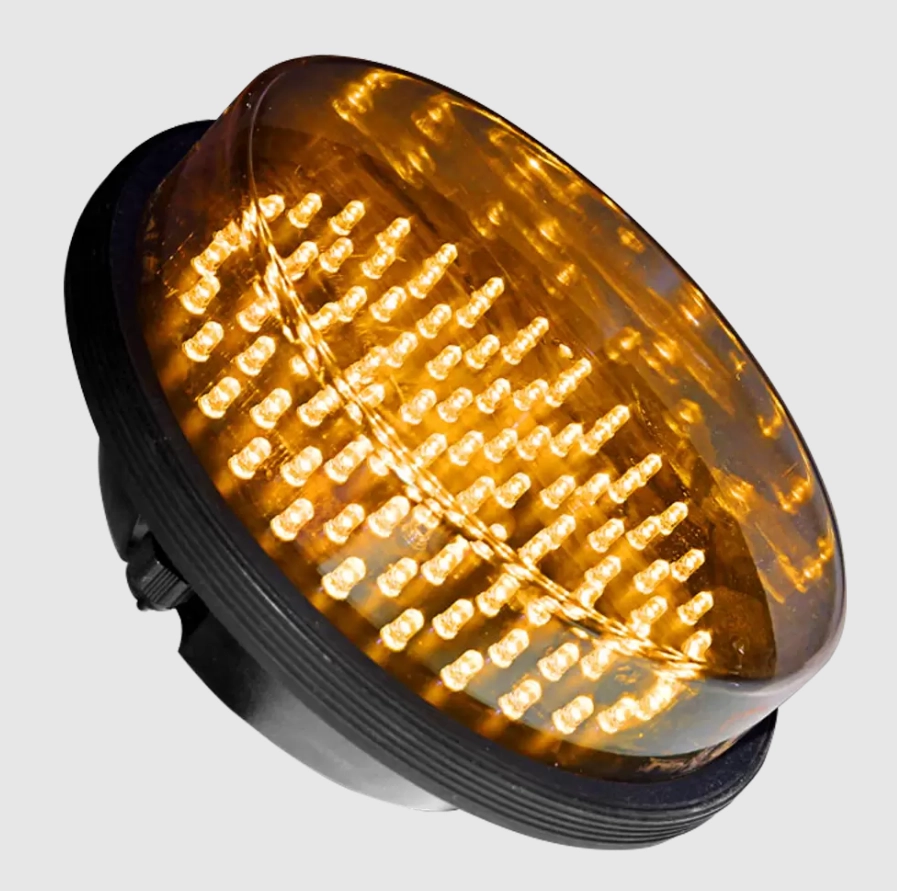
About FAMA Traffic: Engineering Credibility That Matters
Yangzhou FAMA Intelligent Equipment Co.,Ltd. (hereinafter: FAMA Traffic) is a provider of integrated solutions for intelligent transportation, guided by the mission of “making travel safer and smarter.” Since its establishment in 2005, the company has built a strong reputation across smart signal control, smart traffic safety, and 5G multifunctional smart poles, while also delivering professional services such as signal timing optimization and operation & maintenance.
Its industry recognition includes:
The Leading Enterprise In China's Traffic Signal Lights Industry
Ranked No.1 in China by Sales Volume of Traffic signal Lights
Ranked No.1 in China by Export Volume of Traffic signal Lights
Ranked No.1 in China by Export Volume of Traffic Signal controllers
FAMA - The Leading Enterprise In China's Traffic Signal Lights Industry
These honors are not branding statements; they reflect sustained performance in high-reliability, large-scale traffic deployments worldwide.
Frequently Asked Questions (FAQ)
Q1: Does mesh circuit design increase initial module cost?
While the internal design is more sophisticated, lifecycle savings from reduced failures and maintenance typically outweigh any marginal upfront difference.
Q2: Can mesh circuit modules be used in harsh climates?
Yes. The combination of constant current drive, high EMC performance, and efficient thermal behavior makes them suitable for extreme temperature and high-humidity environments.
Q3: How does this design support future smart city upgrades?
By minimizing hardware failure risk, mesh circuit modules ensure stable visual execution for adaptive signal control and connected traffic systems.
Closing Perspective
Total signal failure is no longer an acceptable risk in modern traffic management. By embedding resilience directly into circuit topology, mesh circuit design fundamentally redefines how traffic light modules behave under real-world stress.
For cities, contractors, and system integrators seeking durable, future-proof signal infrastructure, this design philosophy—exemplified by FAMA Traffic’s Low Power Full Ball Traffic Light Module—represents not an incremental improvement, but a structural upgrade in how intersection safety is engineered.


