
Home > News > Industry News > How Low Power Red Cross and Green Arrow Traffic Light Modules Drive Smarter Traffic Flow in Urban Intersections


How Low Power Red Cross and Green Arrow Traffic Light Modules Drive Smarter Traffic Flow in Urban Intersections
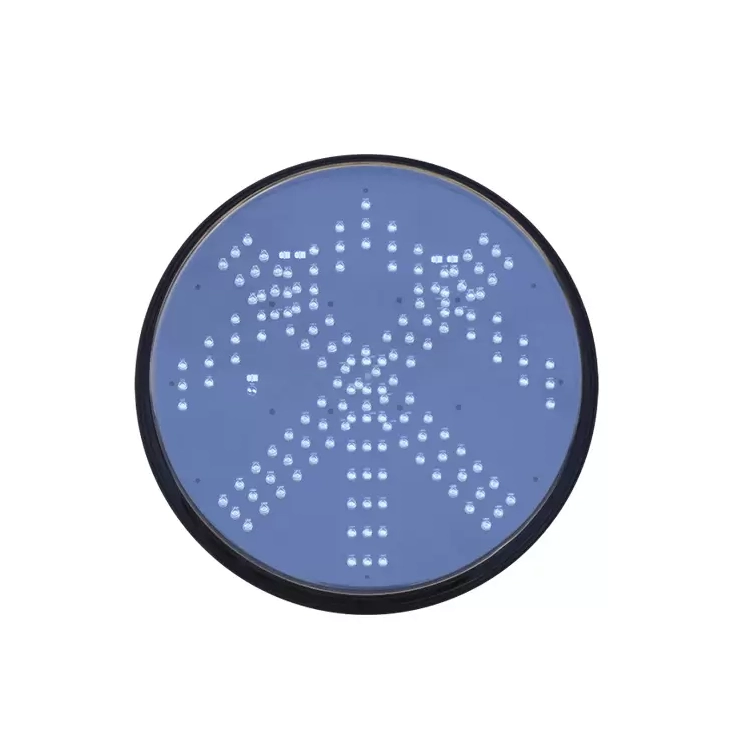
Urban intersections are facing increasing challenges due to rising traffic volumes, unpredictable congestion, and the growing demand for safer, more efficient vehicle management. To address these challenges, traffic authorities are turning to intelligent signaling technologies that optimize traffic flow while minimizing energy consumption. Among these solutions, the Low Power Red Cross and Green Arrow Traffic Light Module stands out. FAMA - The Leading Enterprise In China's Traffic Signal Lights Industry, leveraging its decades of experience, has developed these modules to improve urban traffic control, reduce congestion, and enhance pedestrian and driver safety through smarter traffic flow management.
Advanced Mesh Circuit Design for Reliability
The Low Power Red Cross and Green Arrow Traffic Light Module employs a sophisticated mesh circuit design, ensuring that each LED lamp bead operates independently. Key benefits include:
Fault Isolation: When a lamp bead fails, the fault point is automatically isolated, keeping the remaining LEDs operational.
lReduced Maintenance: Fewer failures lead to lower maintenance frequency, which is crucial in busy intersections.
Stable Display: Maintains consistent visual clarity for red cross and green arrow signals, improving safety and reliability.
Additionally, the modules utilize a European standard power supply with an energy conversion efficiency up to 98%, significantly reducing electricity consumption and supporting environmentally friendly city infrastructure.

Constant Current Drive for Long Life and Uniform Illumination
Constant current drive technology ensures stable electrical current across all LEDs, offering several advantages:
Extended Lifespan: Prolonged LED lifespan reduces long-term operational costs.
Uniform Brightness: Enhances visibility for drivers and pedestrians, even in adverse weather conditions such as fog or heavy rain.
Reliable Performance: Minimizes flickering and uneven lighting, supporting safer urban driving environments.
Furthermore, strict adherence to European electromagnetic compatibility standards limits total harmonic distortion to under 10%, reducing interference with other traffic systems and nearby electronic devices.
Seamless Integration Across Urban Intersections
The modules are designed for flexible integration across a wide variety of intersections:
Multi-lane urban junctions
Tunnel and underpass intersections
Toll stations and highway exits
Key integration features include:
Adaptive Control Compatibility: Modules can synchronize with smart traffic management systems for real-time adjustments based on traffic flow.
Scalable Deployment: Easily deployed in both small and complex intersections, ensuring optimized traffic movement.
Energy Efficiency: Low power design contributes to reduced energy costs while maintaining high visibility.
Proactive Maintenance and Operational Excellence
FAMA Traffic enhances module efficiency with advanced monitoring and maintenance solutions:
Remote Diagnostics: Detects and resolves issues proactively, minimizing unexpected signal downtime.
Modular Design: Allows rapid replacement or upgrade of components without disrupting intersection operations.
Predictive Maintenance: Helps traffic authorities plan maintenance schedules effectively, improving intersection uptime.
These features ensure that municipalities can maintain continuous, stable, and cost-effective traffic operations while leveraging cutting-edge technology.
Driving the Future of Smart Cities
The adoption of Low Power Red Cross and Green Arrow Traffic Light Modules is a critical step toward building smart city infrastructures. Their advantages include:
Optimized traffic flow and reduced congestion
Enhanced energy efficiency and environmental sustainability
Improved safety for drivers and pedestrians
Support for intelligent transportation data analytics and planning
With FAMA Traffic’s proven expertise, municipalities can deploy these modules confidently, creating safer, greener, and more efficient urban intersections that improve overall city livability.
Conclusion
The Low Power Red Cross and Green Arrow Traffic Light Module represents a perfect combination of reliability, energy efficiency, and intelligent traffic management. By integrating advanced circuit designs, constant current drives, and flexible deployment capabilities, these modules are transforming urban intersections into safer, more efficient hubs of movement. FAMA Traffic continues to lead the market with innovative solutions, ensuring that cities can meet growing traffic demands while maintaining sustainable and high-performance traffic control systems.
FAQ
Q1: What types of intersections are suitable for Low Power Red Cross and Green Arrow Traffic Light Modules?
A1: These modules can be installed in urban multi-lane junctions, tunnels, toll stations, highway exits, and other signal-controlled intersections. They are compatible with most traffic control systems.
Q2: How energy-efficient are these traffic light modules?
A2: The modules feature a European standard power supply with energy conversion efficiency up to 98%, significantly reducing electricity consumption and contributing to environmental sustainability.
Q3: How does the mesh circuit design improve reliability?
A3: The mesh circuit design ensures that if one LED bead fails, it isolates the fault automatically, allowing the remaining LEDs to operate normally, reducing maintenance needs and preventing full signal failure.
Q4: Can these modules integrate with smart traffic management systems?
A4: Yes, they support adaptive control, allowing synchronization with intelligent traffic systems to adjust signal timing in real-time based on traffic flow.
Q5: What maintenance advantages do these modules offer?
A5: With modular design, remote diagnostics, and predictive maintenance capabilities, traffic authorities can maintain stable operations while minimizing service interruptions and costs.


