
Home > News > Company News > Good News! FAMA Wins the Second Prize of the Jiangsu Science and Technology Progress Award


Good News! FAMA Wins the Second Prize of the Jiangsu Science and Technology Progress Award
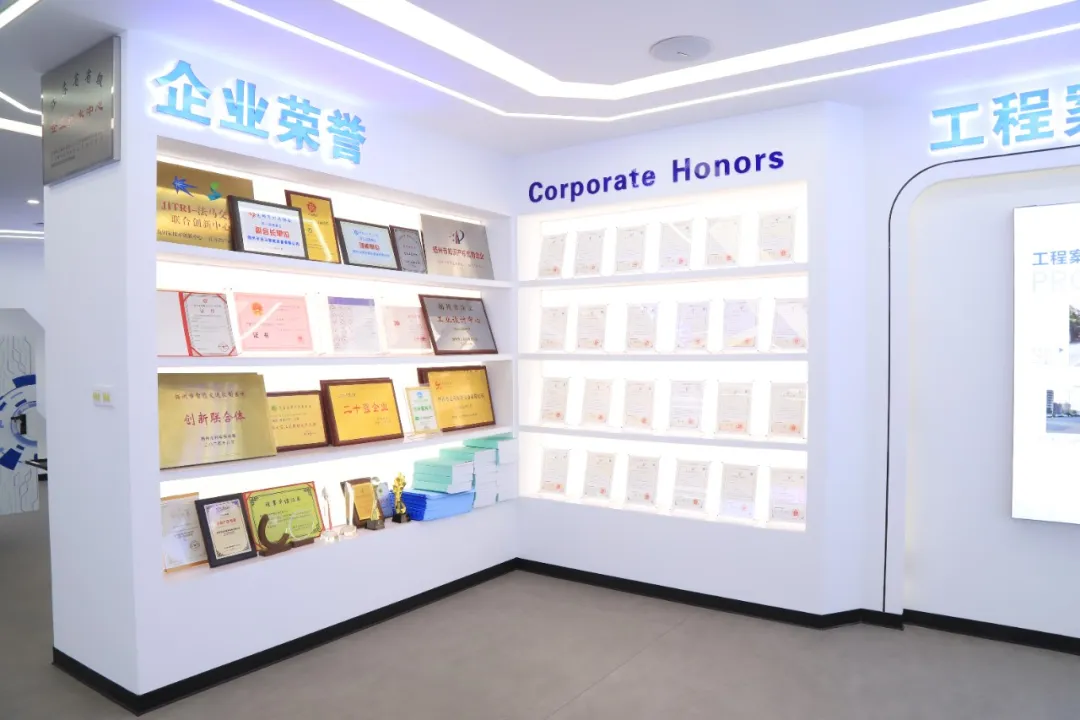
In October, the Jiangsu Provincial Department of Science and Technology officially released the public list of the 2024 Jiangsu Science and Technology Awards comprehensive review results.
The project titled “Data-Intelligence-Driven Integrated Technology and Equipment for Traffic Perception–Simulation–Control,” led by FAMA and jointly completed with Southeast University, the Traffic Management Science Research Institute of the Ministry of Public Security, Zhonglu Jiaoke Technology Co., Ltd., Wuxi Huatong Intelligent Transportation Technology Development Co., Ltd., and the Traffic Management Bureau of Nanjing Public Security Bureau, has won the Second Prize of the 2024 Jiangsu Science and Technology Progress Award.This honor not only demonstrates strong recognition of FAMA’s technological innovation capability but also reflects the company’s deep commitment and industry-leading position in the smart transportation sector.

A Highly Prestigious and Competitive Award
The Jiangsu Science and Technology Award is the highest honor in the province’s science and technology field. Known for its rigorous evaluation and high competitiveness, the award aims to commend scientific and technological achievements that have made outstanding contributions to key core technologies, major engineering projects, and the transformation of scientific research results.
In this year’s public list, a total of 27 projects from Yangzhou were shortlisted, among which only 11 projects received the Second Prize of the Science and Technology Progress Award, covering high-end equipment, new energy, new materials, modern agriculture, medical health, and other key industrial sectors.
The successful selection of FAMA’s project fully demonstrates its comprehensive strength in innovation capability, technological breakthroughs, and industrial value.
This award not only represents industry recognition of FAMA’s technological achievements but also reflects the fact that smart transportation is becoming an increasingly key driving force for high-quality urban development.
Solving Real Traffic Challenges and Increasing Urban Efficiency
In traditional traffic systems, the links of “perception–simulation–control” are often disconnected, making it difficult to respond to dynamic traffic changes in real time, flexibly, and intelligently.
The award-winning “Data-Intelligence-Driven Integrated Technology and Equipment for Traffic Perception–Simulation–Control” is a holistic solution featuring precise perception, intelligent simulation, and closed-loop control.
This system functions like the “smart brain” of urban traffic—it can sense real-time road network conditions, predict traffic flow variations, and dynamically adjust signal control strategies to improve overall network efficiency.
At present, the system has been deployed in multiple cities across China, delivering remarkable results:
In Nanjing:
The developed simulation platform has become a key tool for the municipal traffic management bureau’s daily strategy optimization.
It enables green-wave coordination along 168 road segments and dynamic signal coordination at 752 intersections.
Despite continuous growth in vehicle ownership, it has effectively prevented increases in travel time for buses and private cars, avoiding further congestion deterioration.In Kunshan:
Over 1,500 signalized intersections across the city have been upgraded with intelligent systems.
The overall road network efficiency has increased by more than 15%, benefiting more than 2 million residents and becoming a model project for smart transportation improving public mobility.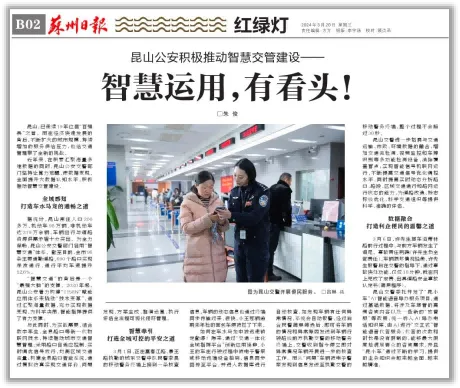
At the Sutong Bridge:
Applied in the smart capacity expansion project, the system has increased the average bridge deck speed by 33% under high traffic demand, reduced mainline delay by 30%, and serves over 40 million trips annually.International Deployment:
The project’s achievements have also been exported to markets such as Saudi Arabia, contributing to deeper cooperation under the Belt and Road Initiative in the transportation sector.
Significant Benefits for Clients
Overall, the solution delivers remarkable improvements:
Main road average speed increased by over 20%
Intersection average delay reduced by over 20%
Road capacity improved by over 15%
These results highlight FAMA’s strong capacity to empower cities with intelligent mobility solutions and promote efficient, high-quality urban transportation development.
Breakthroughs in Core Technological Innovation
Few-Shot Training Technology for Multimodal Traffic Perception
Challenge addressed: Traditional AI models require large training datasets and have low computational efficiency.
Breakthrough: A novel few-shot training technology was developed, enabling 95% multimodal joint perception accuracy using only 20% of the original training data, significantly improving model training efficiency.Edge Computing Technology and Devices for Multimodal Traffic Perception
Challenge addressed: Perception computation relied heavily on cloud platforms, resulting in insufficient real-time responsiveness.
Breakthrough: End-to-end edge computing was achieved, covering data collection, fusion, and feature extraction. While maintaining 95% perception accuracy, computational efficiency increased by 30 times, enabling high-precision real-time perception.Data-Intelligence-Driven Road-Network Coordinated Control Technology and Equipment
Challenge addressed: Traditional control methods have poor adaptability and cannot effectively respond to varying traffic demands.
Breakthrough: Innovative strategies were introduced, such as autonomous emergency-lane opening/closing control and ramp feedforward control based on online simulation, enabling coordinated management of highway entrances, ramps, and emergency lanes.
In pilot applications, peak-hour capacity increased by 1,500 pcu/h, and average speed improved by 33%.
In addition, the project has established a full-chain “Perception–Simulation–Control” technology system with independent intellectual property rights, forming a complete closed loop from theoretical methodologies and core algorithms to software and hardware equipment. It has also realized domestic replacement of foreign signal control systems such as TRANSYT, SCATS, and SCOOTS, with key performance indicators fully leading.
Winning the Second Prize of the 2024 Jiangsu Science and Technology Progress Award is not only recognition of FAMA’s decade-long commitment and innovation but also an important starting point for the next stage.
In the future, FAMA will continue to adhere to the philosophy of “technology-driven and application-oriented,” deepening the R&D and practical implementation of integrated “perception–simulation–control” technologies, and contributing more “FAMA strength” to the development of a safer, more efficient, and greener modern smart transportation system.


