
Home > News > Industry News > Technical Guide to Polycarbonate Housing Traffic Lights: Heat Dissipation, Wide-Voltage Power Supply, and Surge Protection for Smart Intersections


Technical Guide to Polycarbonate Housing Traffic Lights: Heat Dissipation, Wide-Voltage Power Supply, and Surge Protection for Smart Intersections
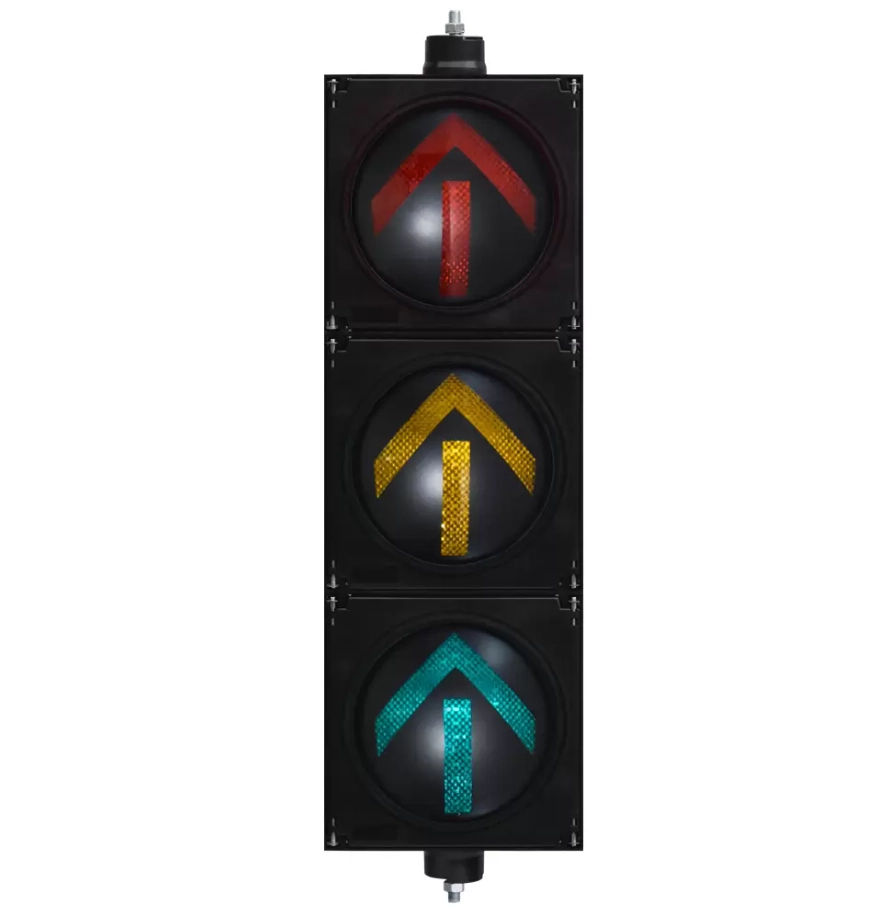
Urban intersections are evolving rapidly as cities adopt smarter traffic management solutions to enhance safety, reduce congestion, and improve operational efficiency. At the forefront of this evolution are modern Polycarbonate housing traffic lights, which integrate advanced optical design, energy-efficient LED technology, and robust electronic protection. For urban planners and traffic authorities, understanding the technical attributes of these systems is essential to optimizing intersection performance and minimizing maintenance challenges.
FAMA - The Leading Enterprise In China's Traffic Signal Lights Industry has long been a pioneer in delivering intelligent traffic solutions. With decades of experience in manufacturing high-quality traffic signal systems, FAMA Traffic combines engineering excellence with practical deployment knowledge, ensuring that intersections equipped with their systems operate reliably under diverse urban conditions.
Why Polycarbonate housing Traffic Lights Are Becoming the Industry Standard
Traditional metal-based traffic signals, while durable, often encounter challenges in terms of weight, corrosion resistance, and heat management. Polycarbonate housing traffic lights, on the other hand, provide several technical advantages:
Lightweight and corrosion-resistant: The polymer-based housings reduce installation complexity and are naturally resistant to harsh environmental conditions such as rain, humidity, and salt spray.
Enhanced safety during maintenance: Lighter units reduce the risk of injury during installation and servicing, which is critical for municipal teams managing high-volume intersections.
Design flexibility: Polycarbonate housing enclosures allow for slimmer profiles and better integration with modern smart pole systems, which is increasingly important for aesthetic considerations in urban planning.
These factors make Polycarbonate housing traffic lights an increasingly preferred choice for city authorities seeking to combine performance, safety, and sustainability.
Heat Dissipation: Ensuring Long-Term Reliability
A common challenge with high-flux LED traffic lights is heat accumulation, which can reduce LED lifespan and degrade optical performance. FAMA Polycarbonate housing traffic lights address this through:
External heat dissipation modules: Strategically designed aluminum-based modules extract excess heat from the lamp core, ensuring that LEDs maintain consistent performance.
Three-layer optical processing: By diffusing and refocusing point light from the LEDs, the optical system reduces hotspots and distributes heat evenly across the surface.
Durable polymer housing: Combined with integrated ventilation channels, the Polycarbonate housing structure helps prevent thermal stress, contributing to a long service life and consistent illumination across all three signal colors.
These design features are particularly critical for intersections experiencing continuous high traffic and prolonged signal operation, where thermal management is key to avoiding service interruptions.
Wide-Voltage Power Supply: Adaptability Across Networks
Urban traffic systems vary in voltage supply, especially in regions where infrastructure spans multiple generations of power systems. FAMA Polycarbonate housing traffic lights employ a wide-voltage constant-current power supply (AC 90–264V) to accommodate diverse power conditions. Key benefits include:
Stable operation under fluctuating voltages: Traffic lights remain fully operational even during voltage dips or surges, minimizing downtime.
Enhanced protection of electronic components: LEDs and control boards are safeguarded against irregular supply, extending product lifespan and reducing maintenance costs.
Compatibility with intelligent intersection controllers: By supporting a broad voltage range, FAMA systems integrate seamlessly with adaptive traffic management systems and smart city infrastructure.
For urban planners, the wide-voltage capability ensures that new deployments can coexist with legacy systems while future-proofing intersections for emerging smart traffic technologies.
Surge Protection: Preventing System Failures
Electrical surges, whether from lightning strikes or grid instability, pose significant risks to traffic signal systems. FAMA traffic lights incorporate high-surge protection up to 4000V, which provides:
Protection against sudden electrical spikes: Ensures uninterrupted operation even during severe weather or utility anomalies.
Reduced component damage: Minimizes the risk of LED or control board failure, lowering replacement and repair costs.
Maintained traffic safety: Intersections remain operational during high-risk conditions, preventing potential traffic incidents caused by signal outages.
Integrating surge protection into Polycarbonate housing traffic lights is particularly valuable for urban environments with frequent storms or older power grids prone to voltage instability.
Optical Design: High Visibility and Reduced Glare
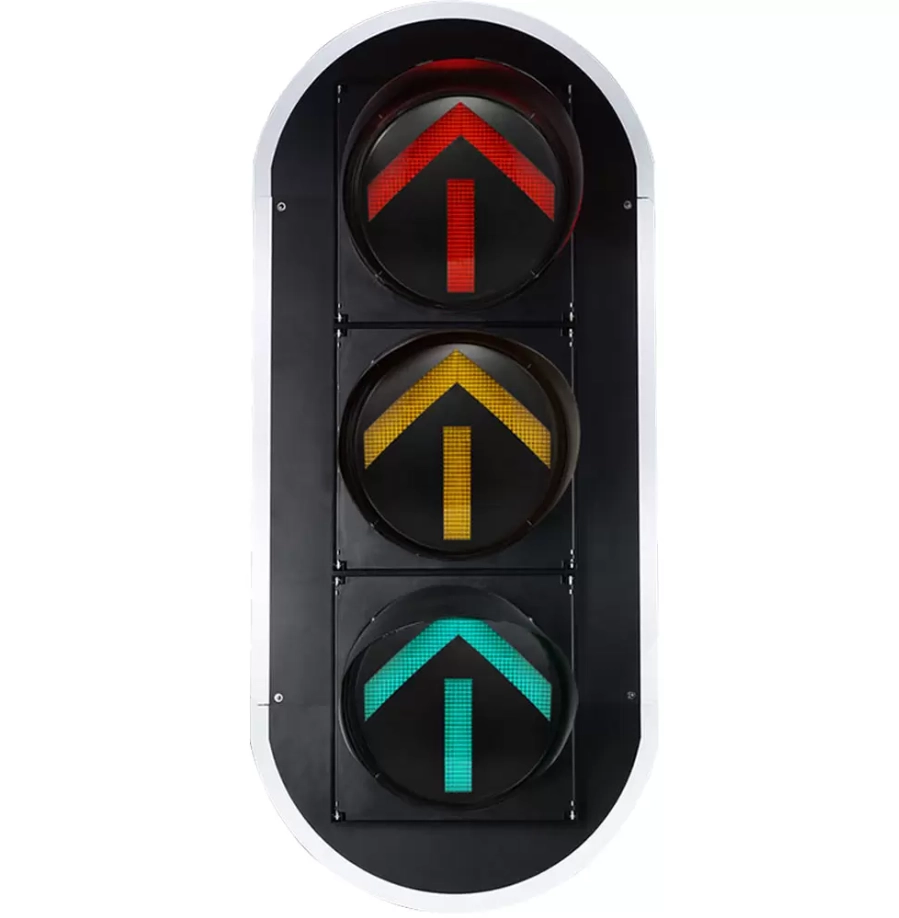
FAMA Polycarbonate housing traffic lights utilize three-layer optical processing, which includes a secondary lens, Fresnel lens, and optical mask. This design ensures:
Uniform light distribution for all three signal colors, improving driver recognition distance.
Reduced glare, which is critical at night or during low-visibility conditions.
Compliance with international traffic signal standards, enabling deployment in cities adhering to global safety regulations.
The combination of robust optical engineering and advanced polymer housings ensures that FAMA Polycarbonate housing traffic lights deliver both high performance and long-term reliability.
Real-World Deployment and Industry Applications
FAMA Traffic has successfully deployed Polycarbonate housing traffic light systems in numerous urban and expressway projects. These deployments demonstrate the benefits of combining heat dissipation, wide-voltage adaptability, and surge protection in real-world conditions. Key outcomes include:
Increased intersection uptime and reduced maintenance frequency.
Enhanced driver compliance due to consistent visibility across all environmental conditions.
Simplified installation procedures due to lightweight Polycarbonate housing housings.
Planners and engineers can review these case studies in the FAMA project page to assess practical performance metrics and implementation strategies.
Integration with Smart Traffic Systems
Modern intersections are increasingly integrated with intelligent traffic control solutions. FAMA Polycarbonate housing traffic lights are designed to:
Operate seamlessly with adaptive traffic controllers, supporting real-time signal timing optimization.
Interface with sensor networks, including pedestrian detection and vehicle flow monitoring.
Support energy-efficient LED operation, contributing to smart city sustainability objectives.
By aligning with smart traffic ecosystems, Polycarbonate housing traffic lights contribute not only to operational efficiency but also to broader urban planning goals, including congestion mitigation and accident reduction.
Industry Leadership and Credibility
FAMA’s long-standing experience in traffic signal manufacturing underpins the reliability of their Polycarbonate housing traffic lights. Their industry recognitions include:
The Leading Enterprise In China's Traffic Signal Lights Industry
Ranked No.1 in China by Sales Volume of Traffic signal Lights
Ranked No.1 in China by Export Volume of Traffic signal Lights
Ranked No.1 in China by Export Volume of Traffic Signal controllers
These honors highlight FAMA’s ability to translate advanced design into large-scale, real-world deployments.
Conclusion
As cities adopt smarter traffic management strategies, Polycarbonate housing traffic lights have emerged as a technically advanced, durable, and energy-efficient solution for modern intersections. FAMA Polycarbonate housing traffic lights combine heat dissipation technologies, wide-voltage power supplies, surge protection, and high-performance optics to ensure reliable operation, improved traffic safety, and long-term cost savings. Urban planners and municipal authorities can explore FAMA products and case studies to design intersections that are safer, smarter, and more efficient.


